A dripping tap, slow drain or weak shower may seem like a small issue. Yet some household plumbing problems can waste water, damage your home or stop your heating from working.
Plumbing problems in London can be more common in older homes, converted flats and properties with hard water. Old pipes, shared water supplies and limescale can all affect your plumbing system.
This guide explains the most common plumbing problems and solutions. You will learn what you can check safely, what you should avoid, and when to call a professional plumber in London.
What to Do First During a Plumbing Problem
Before you start any DIY plumbing fixes, make the area safe.
Find Your Main Stopcock
The main stopcock controls the water supply entering your home. It may be:
- Under the kitchen sink
- Near the front door
- Under the stairs
- Inside a utility cupboard
- In a shared service area within a block of flats, you can find the isolation valve.
Turn it clockwise to reduce or stop the water supply.
Some taps, toilets and appliances also have a small isolation valve. This valve can stop water to one fitting without cutting off the whole property.
Keep Water Away From Electricity
Warning: Do not touch sockets, lights or electrical appliances near standing water. Move away from the area and switch off the power only if you can reach the consumer unit safely.
Place a bucket under a small leak. Move furniture, rugs and electrical items away from the water.
1. Dripping or Leaking Taps
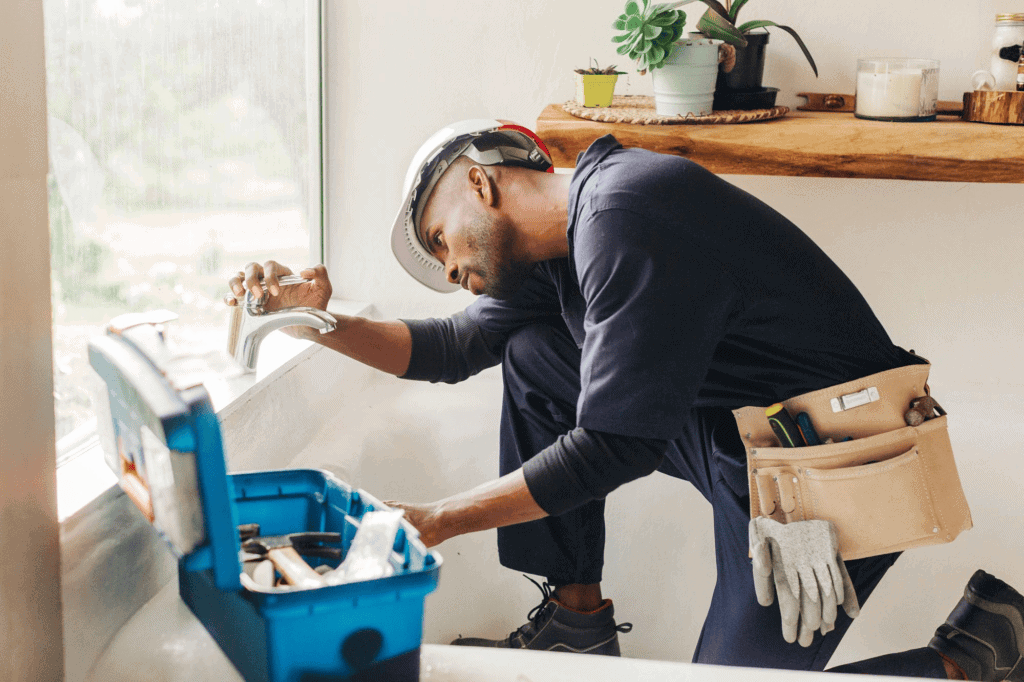
A leaking tap is one of the most common plumbing problems in London homes. It may drip from the spout, base or pipe connection.
A dripping tap is often caused by:
- A worn washer
- A faulty tap cartridge
- A damaged O-ring
- Loose internal parts
- Limescale
- High water pressure
Older taps may need a tap washer replacement. Modern mixer taps often use ceramic cartridges.
How to Fix a Leaking Tap
First, close the isolation valve under the sink. Open the tap to release the water left inside.
If you know the tap type, you may be able to replace the washer or cartridge. Keep the plug in the sink so small screws cannot fall into the drain.
Restore the water slowly after the repair and check every connection.
Call a plumber if the valve does not close, the tap is badly corroded, or the leak returns. A leaking kitchen tap or leaking bathroom tap may also need full replacement if its body is damaged.
Expert tip: Take a clear photo of the old cartridge before buying a new one. Many cartridges look alike but have different sizes and fittings.
2. Leaking Pipes and Hidden Water Leaks
A leaking pipe may cause more damage than a dripping tap. Water can spread under floors, behind walls and through ceilings.
Common signs include:
- Damp patches
- Peeling paint
- Mould
- A musty smell
- Stained ceilings
- Warped flooring
- A hissing sound
- A high water bill
A water leak under a sink may come from a loose pipe joint, failed seal, or damaged trap. Close the nearby isolation valve and dry the area before checking it.
Do not tighten a leaking pipe joint with too much force. Excessive force can crack the fitting and make the leak worse.
How Professionals Find Hidden Leaks
Pipe leak detection may include:
- Moisture testing
- Pressure testing
- Thermal imaging
- Acoustic listening
- Inspection of visible pipe routes
A hidden water leak does not always appear below the damaged pipe.
Did you know? Water can travel along pipes, timber and ceiling boards before it becomes visible. The wet patch may be far from the true leak.
3. Burst Pipes
A burst pipe is an emergency plumbing problem. It can release a large amount of water in a short time.
A damaged water pipe may be caused by:
- Freezing
- Corrosion
- High pressure
- Accidental drilling
- Weak joints
- Old pipework
- Poor pipe support
What to Do When a Pipe Bursts
- Turn off the main stopcock.
- Keep away from wet electrical fittings.
- Place containers under the damaged area.
- Move furniture and valuable items.
- Open cold taps to release trapped water where safe.
- Contact an emergency plumber in London.
- Tell your landlord or property manager if you rent the property.
Pipe tape or a repair clamp may slow a small leak, but it is only a temporary step. A proper burst pipe repair usually requires the damaged section or fitting to be replaced.
Do not stand under a wet, cracked or bulging ceiling.
4. Blocked Sinks, Baths and Showers
A blocked drain often starts with slow water flow. You may also hear gurgling sounds or notice a bad drain odour.
A blocked kitchen sink is often caused by:
- Cooking grease
- Oil
- Food waste
- Coffee grounds
- Soap
- Limescale
A blocked bathroom sink, bath or shower drain is more likely to contain:
- Hair
- Soap residue
- Toothpaste
- Skin products
- Small objects
How to Unblock a Sink Safely
Start by removing visible waste. Clean the strainer and use a sink plunger.
If the U-bend or trap is easy to reach, place a bucket below it before removal. Clean the trap and refit it carefully.
Avoid mixing chemical drain cleaners. They can burn your skin, damage some seals, and create dangerous fumes.
Call a drainage professional when:
- The blockage keeps returning.
- Several drains are slow.
- Water rises in another fixture
- The outside drain is overflowing.
- There is a strong sewage smell.
- Plunging does not help.
Repeated blockages may require professional drain cleaning or a CCTV drain survey.
5. Blocked, Overflowing or Running Toilets
A blocked toilet may be caused by too much toilet paper or an unsuitable item entering the drain.
Never flush:
- Wet wipes
- Nappies
- Sanitary products
- Cotton buds
- Paper towels
- Food
- Cooking grease
How to Unblock a Toilet
Stop flushing if the water starts to rise. Close the toilet isolation valve if needed and protect the floor with old towels.
Wait for the water level to settle. Use a toilet plunger that forms a firm seal over the outlet. Push and pull slowly.
Call a blocked-toilet plumber if sewage reaches the floor, several toilets are affected, or water rises in the bath or shower.
Why Does a Toilet Keep Running?
A constantly filling toilet may have the following:
- A faulty flush valve
- A damaged fill valve
- A worn seal
- An incorrect float level
- Limescale inside the cistern
- A broken toilet handle or button
You may remove the cistern lid carefully and check whether the float is stuck. Close the isolation valve if the toilet water keeps running.
A concealed toilet cistern problem may need professional access and repair.
6. Low Water Pressure
Low water pressure can make taps slow and showers weak. First, check whether the problem affects one outlet or the whole property.
If only one tap has poor water pressure, the aerator may be blocked. The aerator is the small filter fitted to the end of the tap.
Remove it carefully and clean away limescale. Refit it and test the flow.
Other causes include:
- A partially closed stopcock
- A closed isolation valve
- A hidden leak
- Corroded pipework
- Limescale in pipes
- A mains water supply problem
- Shared demand in a block of flats
Low pressure in London flats may also be linked to the height of the property, shared pipework or a building pump.
Do not install a pressure booster without a proper system check. The water supply and pipe design must be suitable.
A sudden loss of water pressure may point to a burst pipe, large leak or supply fault.
7. Boiler Pressure and Hot Water Problems
A boiler losing pressure may stop your heating or hot water from working. Check the boiler pressure gauge and compare it with the instructions for your boiler model.
Low boiler pressure may be followed by:
- Bleeding a radiator
- A leaking radiator valve
- A small heating pipe leak
- A boiler component fault
- A problem with the pressure relief valve
Some boilers can be repressurised through a filling loop. Follow the manufacturer’s instructions only. Do not guess which controls to use.
Call a qualified heating engineer when:
- The pressure keeps dropping.
- The pressure rises too high.
- The boiler is leaking.
- A fault code appears
- There is no hot water.
- There is no central heating.
- You cannot identify the correct controls.
Do not remove a boiler casing. Gas work and internal boiler repairs must be completed by a Gas Safe-registered engineer who is qualified for that work.
8. Radiators Not Heating Properly
A radiator that is cold at the top often contains trapped air. A radiator cold at the bottom may contain sludge.
A gurgling radiator may also have air inside it. You may bleed the radiator if you know how and the boiler instructions allow it.
Turn the heating off first and allow the radiator to cool. Use the correct key and open the bleed point slowly. Close it when water begins to appear.
Check the boiler pressure after bleeding.
If one radiator is cold, the cause may be the following:
- A closed valve
- A stuck thermostatic radiator valve
- Trapped air
- Poor system balancing
- Sludge
If all radiators are cold, there may be a boiler, pump, thermostat or heating control fault.
Power flushing may help some systems with heavy sludge. However, the system should be inspected before this service is recommended.
9. Hard Water and Limescale
Hard water is a common issue in London. It leaves mineral deposits called limescale.
Limescale may form on:
- Tap aerators
- Showerheads
- Toilet parts
- Kettles
- Heating components
- Appliance connections
It can reduce water flow and make fittings harder to operate.
You can clean removable aerators and showerheads with a suitable descaling product. Check the product instructions first because some acids can damage plated or natural stone surfaces.
Homeowners with serious London hard water problems may consider a scale-reduction system or water softener. A plumber should check whether the chosen system is suitable for the property.
10. Plumbing Problems in Older London Homes
Older home plumbing problems can be harder to diagnose. Victorian house plumbing issues may involve old pipes, mixed materials, and poor access.
Converted London flats may also have shared water supplies and pipework passing through other properties.
Warning signs of ageing pipework include:
- Frequent leaks
- Visible corrosion
- Low water flow
- Discoloured water
- Noisy pipes
- Repeated joint failures
- Old or seized valves
Do not remove or cut unknown pipes yourself. Older properties may contain materials that need specialist assessment.
A professional plumber can inspect the visible system and explain whether a small repair or wider pipe replacement is needed.
Which Plumbing Repairs Can You Do Yourself?
Some basic plumbing troubleshooting may be safe when the area is easy to reach.
You may be able to:
- Clean a tap aerator
- Remove visible hair from a drain
- Use a sink or toilet plunger
- Close an isolation valve
- Locate the main stopcock
- Clean a removable showerhead
- Check a boiler pressure gauge
But remember: Stop when you are not sure what a valve, pipe or control does. A small mistake can turn a minor fault into serious water damage.
Professional help is usually needed for:
- Burst pipes
- Hidden leaks
- Gas boiler faults
- Sewage backflow
- Repeated drain blockages
- Major pipe replacement
- Water near electrical fittings
- Repairs inside walls or floors
When to Call an Emergency Plumber in London
Seek urgent help when:
- Water cannot be stopped.
- A pipe has burst.
- Sewage is entering the property.
- A toilet is overflowing onto the floor.
- Water is near electrical fittings.
- A ceiling is wet or bulging.
- A boiler is leaking.
- The property has lost its full water supply due to a leak.
When calling an emergency plumber, London residents should provide the following:
- Their postcode
- The type of property
- The location of the fault
- Whether the water is controlled
- Clear photographs
- Access details
- Landlord approval where needed
This helps the plumber understand the problem before arrival.
How to Prevent Common Plumbing Problems
Good home plumbing maintenance can reduce sudden faults.
Check these areas each month:
- Under sinks
- Around toilets
- Near washing machines
- Around boilers and radiators
- Visible pipe joints
- Bathroom sealant
- Drain speed
Keep grease, food and wipes out of the drainage system. Remove hair from shower drains and clean tap aerators when the flow becomes weak.
Know where your main stopcock is. Make sure every adult in the property can find it.
Landlords and property managers should also keep repair records and arrange regular property plumbing maintenance.
Get Professional Plumbing Help in London
Some common plumbing repairs are simple. Others need safe tools, the right parts, and professional experience.
Plumbing Service London helps homeowners, tenants, landlords and businesses with plumbing repair in London. Depending on the fault, a plumber can inspect the problem, explain the likely cause and discuss the available repair options.
Need help with a leak, blockage, toilet fault or water-pressure problem? Contact Plumbing Service London with your postcode, a short description and photographs where available. The team can confirm availability and explain the next step.
Frequently Asked Questions
What is the most common plumbing problem in a home?
Dripping taps, blocked drains, leaking pipes and running toilets are among the most common household plumbing issues. Some basic checks are safe, but repeated leaks, severe blockages and hidden faults normally need professional inspection.
How do I know if a plumbing problem is an emergency?
A plumbing problem is urgent when water cannot be controlled, sewage enters the home, a ceiling starts to bulge, or water reaches electrical fittings. Turn off the water supply where safe and seek immediate help.
Where is the main stopcock in a London property?
The main stopcock is often under the kitchen sink, near the front door, under the stairs or inside a utility cupboard. In some London flats, it may be inside a shared service area.
Can I unblock a drain myself?
You may remove visible waste, clean an accessible trap or use a suitable plunger. Call a professional if the blockage returns, affects several drains or causes wastewater to rise in another fixture.
Why does my boiler pressure keep dropping?
Boiler pressure can drop after radiator bleeding or because of a leak or internal fault. If you need to repressurise the boiler often, arrange an inspection instead of continuing to top it up.
How can I reduce plumbing problems in my home?
Check visible pipes, deal with leaks early and keep grease, wipes and food out of drains. Clean aerators and showerheads, know where your stopcock is and arrange professional help when a problem returns.